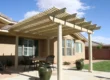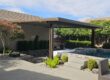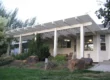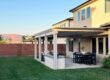
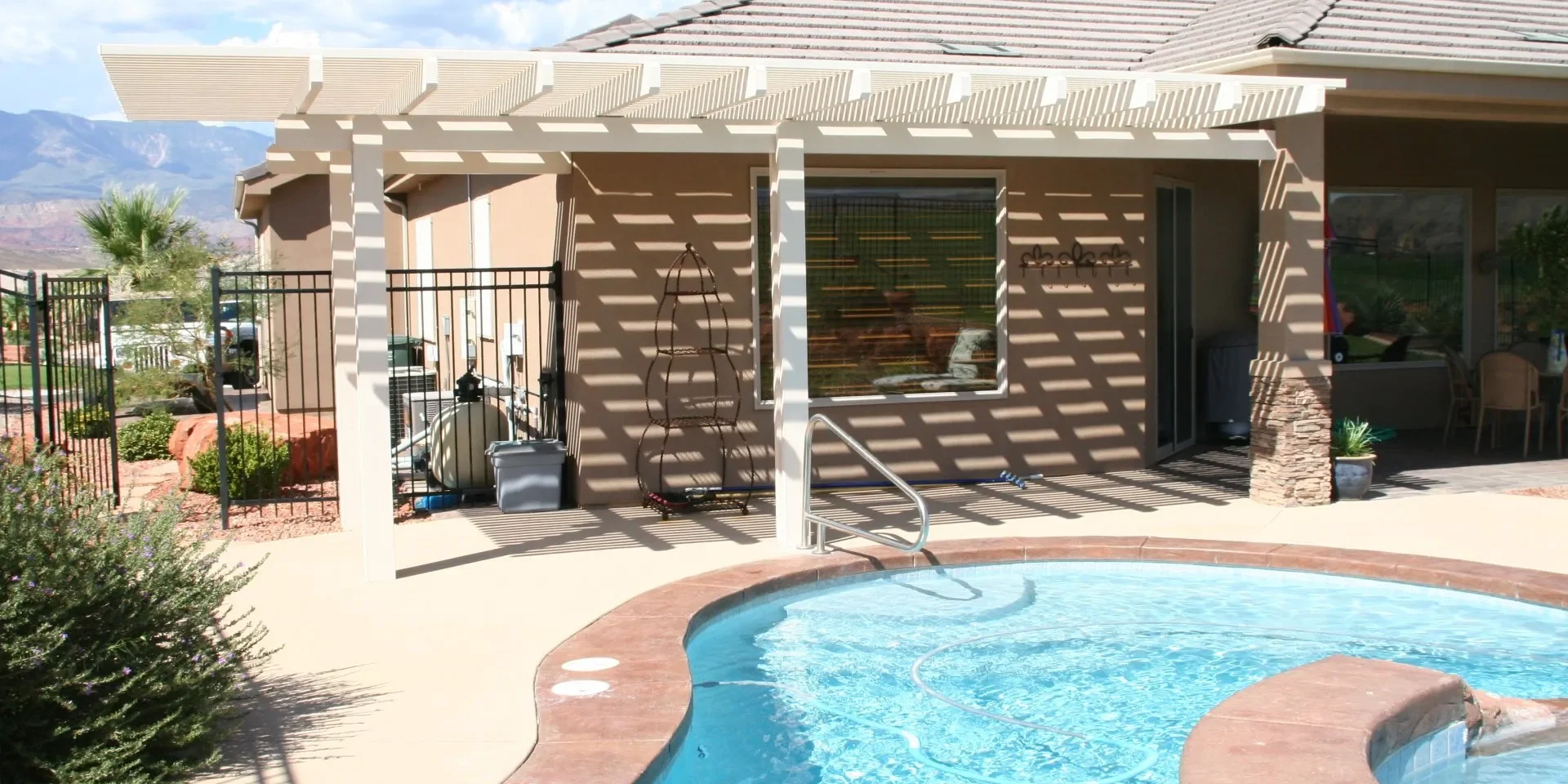
When you decide to add a permanent shade structure to your home, you aren’t just buying an outdoor accessory—you are making a long-term investment in your property’s footprint, comfort, and resale value.
In Southern Utah and Southern Nevada, temporary shade solutions like canvas umbrellas or pop-up tents rarely survive a single season. The combination of triple-digit summer heat, intense UV rays, and sudden canyon wind gusts demands something truly durable.
If you are evaluating local contractors to build a lasting shade structure for your patio, driveway, or business, here is what you need to know about materials, engineering, and climate resilience before breaking ground.
1. Material Selection: Why Aluminum Rules the Desert
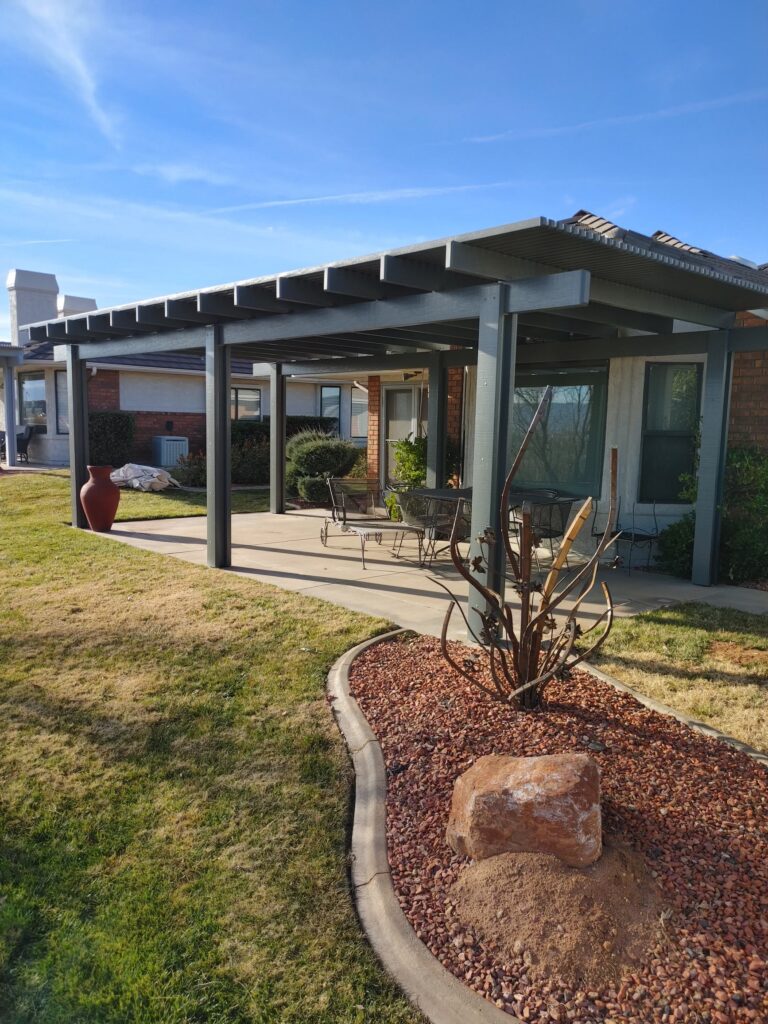 The word “permanent” shouldn’t just mean a structure is bolted into the concrete—it means the materials themselves are built to withstand decades of intense solar radiation without degrading.
-
The Trouble with Wood and Vinyl: Traditional wood pergolas are highly susceptible to the dry desert air. Over time, wood splits, warps, twists, and requires tedious annual sanding and staining to prevent dry rot. On the other hand, cheap vinyl can become brittle and discolor under intense UV exposure.
-
The Aluminum Advantage: Premium aluminum is the gold standard for regional properties. This material also allows you to enjoy the upscale look of real wood grain with zero maintenance. Aluminum will never rust, warp, rot, or peel, making it a truly permanent solution.
2. Structural Integrity: Engineering for Desert Wind Loads
A major oversight with generic or pre-fabricated shade kits is their inability to handle localized weather anomalies.
The St. George basin, Hurricane, and Mesquite are notorious for high-velocity wind gusts rolling off the red rocks, alongside intense summer monsoons. A permanent structure must be engineered to withstand these unique wind loads.
When installing a solid patio cover, lattice awning, or a heavy-duty carport, the installation team must utilize deeply anchored concrete footings, heavy-gauge aluminum rafters, and internal steel inserts. True permanence means your shade structure stays perfectly intact during a 60 mph storm while the neighbors’ temporary umbrellas are flying down the street.
3. Financial Return: Shading Your House, Lowering Your Power Bills
A permanent awning isn’t just an outdoor luxury; it acts as a thermal shield for your home’s interior.
When a solid-top or lattice cover is installed directly over south- or west-facing windows and sliding glass doors, it blocks intense solar heat before it can penetrate your glass. By reducing solar heat gain, homeowners often see a drastic drop in their summer cooling costs, allowing the structure to actively pay for itself over time.
Choosing a Qualified Local Shade Contractor
Because permanent awnings require proper permitting, HOA approvals, and exact engineering, choosing a fully licensed, local contractor is essential. When interviewing companies in your area, ensure they:
-
Are fully licensed and insured to operate across Utah and Nevada.
-
Provide custom-engineered designs tailored to your home’s unique roofline or stucco walls.
-
Have a deep, decades-long track record of building structures that survive the local climate.
Get a Free Local Estimate
At Sun Country Awnings, we have spent over 30 years designing and installing premium, maintenance-free shade solutions across St. George, Washington, Ivins, Hurricane, Cedar City, and Mesquite, NV.
👉 Click here to request your Free, No-Obligation On-Site Consultation or call our office today to speak with an outdoor living expert!